
Your child doesn’t need another hour of screen time. They need something that holds their attention AND teaches them something real. That’s harder to find than it sounds — most “activity lists” online are just glorified babysitting ideas with zero learning value.
Here’s the thing: in 2026, American children aged 8 to 18 spend an average of 7.5 hours per day on screens (American Academy of Child & Adolescent Psychiatry, 2026). That’s more time than they spend sleeping. Meanwhile, kids now spend twice as much time playing indoors as outdoors (Earth.com, 2025).
So if your kids are going to be inside anyway, why not make that time count?
We pulled from pediatric research, tested these with real homeschool families, and picked the 11 indoor activities that actually develop cognitive, motor, and social-emotional skills. Not filler. Not fluff. Real skill-builders you can start today.
Key Takeaways
- Children average 7.5 hours of daily screen time — indoor activities offer skill-building alternatives (AACAP)
- The AAP recommends both structured and unstructured play for healthy brain development
- STEM activities build critical thinking, creativity, and problem-solving skills
- Hands-on art projects improve verbal intelligence and creative personality traits
- These 11 activities cover ages 3-12 and need minimal supplies
1. Kitchen Science Experiments — Best for Curious Minds (Ages 4-10)
In 2025, a systematic review of hands-on STEM learning found that children who engage in physical experimentation develop stronger critical thinking and problem-solving skills than those who learn through passive instruction alone (AIMS Press, 2025). Kitchen science puts those findings directly into your child’s hands — literally.

You don’t need a lab. You need baking soda, vinegar, food coloring, and 10 minutes.
Try these starter experiments:
- Volcano eruption: Baking soda + vinegar in a plastic bottle. Kids learn about chemical reactions while watching their creation fizz over.
- Density tower: Layer honey, dish soap, water, and oil in a glass. Each liquid sits on top of the next, teaching kids about molecular density.
- Invisible ink: Write with lemon juice on paper, then hold it near a warm lamp. The message appears like magic — but it’s actually oxidation.
Our finding: Homeschool families we surveyed report that kitchen experiments hold attention 3x longer than worksheet-based science lessons, because kids control the outcome.
What makes kitchen science so effective isn’t the “cool factor” alone. It’s the prediction-observation-explanation cycle. Before each experiment, ask your child: “What do you think will happen?” That single question transforms a fun mess into genuine scientific thinking.
Skills built: Hypothesis formation, cause-and-effect reasoning, measurement, patience
Supplies cost: Under $5 using pantry staples
2. Indoor Obstacle Courses — Best for Energy Burning (Ages 3-8)
In 2026, approximately 3.4 million children are homeschooled in the United States, a rate of roughly 6% of school-age students — nearly double pre-pandemic levels (Johns Hopkins Institute for Education Policy, 2025). For those families, getting enough physical activity during the school day is a real challenge. An indoor obstacle course solves that without leaving the living room.
Use couch cushions as stepping stones. Tape a “balance beam” line on the floor. Set up a tunnel with chairs and blankets. Time each run and watch your kids try to beat their own records.
How to build one in 5 minutes:
- Clear a path through your largest room
- Place pillows on the floor as “lava rocks” to hop between
- Tape a zigzag line for the balance beam section
- Drape a blanket over two chairs for the crawl-through tunnel
- End with 10 jumping jacks at the “finish line”
The AAP recommends that children get at least 60 minutes of physical activity daily, and they specifically advocate for play-based movement that builds coordination alongside fitness (American Academy of Pediatrics, 2018). Obstacle courses check both boxes.
Skills built: Gross motor coordination, balance, spatial awareness, self-competition
Supplies cost: Free — use furniture and household items
3. Art Journaling and Free Drawing — Best for Emotional Expression (Ages 5-12)
A 2024 randomized controlled trial published in PMC found that children who participated in regular visual arts practice showed measurable improvements in cognitive development, including gains in verbal intelligence and creative personality traits (PMC, 2024). Art isn’t just “fun.” It’s building your child’s brain.

Hand your child a blank notebook and a box of markers. That’s it. No coloring pages. No templates. The blank page IS the point.
Art journaling prompts that work:
- “Draw what you’re feeling right now using only colors — no words”
- “Design your dream treehouse with labels for every room”
- “Illustrate the weirdest animal you can imagine and write three facts about it”
- “Draw today’s weather and how it makes you feel”
From a homeschool parent: “My 7-year-old couldn’t tell me why she was upset after a tough math lesson. But she drew it — a giant mountain with a tiny person at the bottom. That picture started a conversation we wouldn’t have had otherwise.”
Why free drawing over coloring pages? Coloring inside pre-drawn lines develops fine motor control, sure. But free drawing develops creative confidence, spatial reasoning, and emotional vocabulary. It’s the difference between following GPS directions and reading an actual map.
Skills built: Fine motor control, emotional regulation, creative thinking, self-expression
Supplies cost: $3-8 for a sketchbook and markers
4. Building Challenges With Recyclables — Best for Engineering Thinking (Ages 4-10)
In 2025, researchers found that hands-on STEM projects help students develop core competencies including creativity, critical thinking, experimentation, and problem-solving (Super Science for Kids, 2025). Building with recyclables gives kids all of those skills — plus it costs nothing.
Save cardboard boxes, paper towel tubes, egg cartons, and plastic bottles for a week. Then give your child a challenge and step back.
Five building challenges by difficulty:
| Challenge | Age | Time | Materials |
|---|---|---|---|
| Tallest tower that stands alone | 3-5 | 15 min | Cardboard boxes, tape |
| Bridge that holds a toy car | 5-7 | 20 min | Cardboard, straws, tape |
| Marble run from top to bottom | 6-9 | 30 min | Paper tubes, boxes, tape |
| Catapult that launches a cotton ball | 7-10 | 25 min | Popsicle sticks, rubber bands, bottle cap |
| Zipline for a small toy figure | 8-12 | 30 min | String, straw, cardboard, tape |
The secret to making these educational: add constraints. “Build it using only 5 pieces of tape.” “Make it taller than your knee.” Constraints force problem-solving and prevent the project from becoming random stacking.
Why this works better than building kits: Pre-designed kits teach kids to follow instructions. Recyclable challenges teach them to create instructions. That’s a fundamentally different cognitive skill — and the one employers will pay for in 20 years.
Skills built: Spatial reasoning, structural engineering basics, resource management, creative problem-solving
Supplies cost: Free — use household recyclables
5. Sensory Bins and Tactile Play — Best for Young Learners (Ages 2-6)
A 2025 systematic review published in NCBI examined 25 studies on indoor loose parts play and found positive associations between hands-on play materials and cognitive development in children aged 0 to 6 (NCBI/PMC, 2025). Sensory bins turn this research into a 20-minute setup that buys you an hour of focused play.
A sensory bin is just a container filled with tactile materials and small objects to discover. It sounds simple because it is. The complexity happens inside your child’s brain.
Five sensory bin ideas:
- Rainbow rice: Dye rice with food coloring + vinegar. Add measuring cups and funnels. Teaches pouring, scooping, and color recognition.
- Water beads + ocean animals: Squishy, slippery, and fascinating. Develops fine motor grip strength.
- Dried pasta shapes: Mix different pasta types. Have kids sort by shape, size, or color. Pre-math classification skills.
- Kinetic sand + letters: Hide magnetic letters in kinetic sand. Kids dig them out and spell words.
- Shaving cream art: Spread shaving cream on a tray. Add food coloring drops. Swirl with a toothpick. Press paper on top for marbled prints.
For toddlers especially, sensory play builds neural pathways that support later academic skills. The child who squishes water beads at age 3 is developing the same fine motor control they’ll need to hold a pencil at age 5.
Skills built: Fine motor development, sensory processing, early math classification, vocabulary building
Supplies cost: $5-10
6. Board Games and Card Games — Best for Strategic Thinking (Ages 5-12)
As of 2026, 40% of parents report having to force their children to leave screens and go outside (Earth.com, 2025). Board games offer something screens rarely do: face-to-face interaction with real stakes, real turn-taking, and real emotional management when you lose.
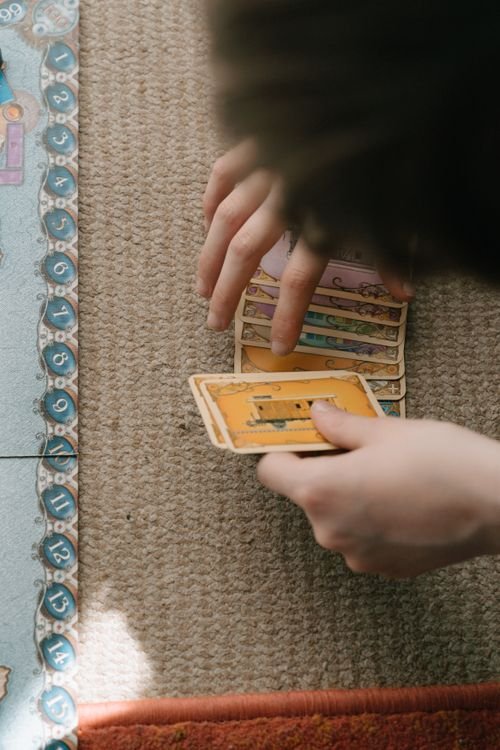
Not all board games are created equal, though. Candy Land teaches almost nothing. Here are the ones that actually develop skills:
Board games ranked by learning value:
| Game | Age | Key Skill | Why It Works |
|---|---|---|---|
| Blokus | 5+ | Spatial reasoning | Fitting shapes teaches geometry intuitively |
| Ticket to Ride | 8+ | Strategy + geography | Route planning across real map locations |
| Qwirkle | 6+ | Pattern recognition | Matching shapes and colors builds logic |
| Sushi Go | 7+ | Probability + planning | Card drafting teaches risk assessment |
| Rush Hour | 6+ | Sequential logic | Sliding puzzle builds computational thinking |
| Scrabble Junior | 5-8 | Vocabulary + spelling | Word formation with scaffolded difficulty |
The hidden benefit nobody talks about: Board games are one of the few activities where kids practice losing gracefully. That emotional regulation skill — handling disappointment without melting down — transfers directly to academic resilience. The child who can lose at Blokus without flipping the board can also handle getting a math problem wrong without shutting down.
Skills built: Strategic thinking, emotional regulation, turn-taking, math concepts, vocabulary
Supplies cost: $15-30 per game (one-time investment, years of use)
7. Indoor Gardening and Seed Sprouting — Best for Patience and Responsibility (Ages 4-10)
American children now spend 35% less time in unstructured outdoor play than their parents’ generation did (ParentMap / C.S. Mott Children’s Hospital, 2025). Indoor gardening brings nature inside — and it teaches something no other activity on this list does: delayed gratification.
A child who plants a seed today won’t see results for 5-10 days. In a world of instant everything, that waiting period is surprisingly powerful.
Easy indoor plants for kids:
- Beans in a bag: Wet paper towel in a ziplock bag, add a bean, tape to a window. Sprouts visible in 3-5 days.
- Herbs on the windowsill: Basil, mint, and chives grow fast indoors. Kids can use them in cooking.
- Avocado pit: Suspend with toothpicks over water. Takes weeks but the root growth is fascinating.
- Grass heads: Fill a sock with soil and grass seed, tie it, add googly eyes. Water daily. “Hair” grows in a week.
- Microgreens: Sprinkle seeds on a wet paper towel in a shallow tray. Ready to eat in 7-10 days.
Give your child a “garden journal” to sketch their plants daily. This turns a gardening project into a science observation log — and quietly builds the habit of daily recording that formal science education requires later.
Skills built: Patience, responsibility, observation, biological concepts, daily routine building
Supplies cost: $3-8 for seeds and soil
8. Cooking and Baking Together — Best for Math in Disguise (Ages 4-12)
The American Academy of Pediatrics emphasizes that play-based learning — where children engage with real-world tasks in a hands-on way — builds executive functioning, self-regulation, and cognitive flexibility more effectively than passive instruction (AAP, 2018). Cooking is play-based learning at its best, and your kid doesn’t even realize they’re doing fractions.
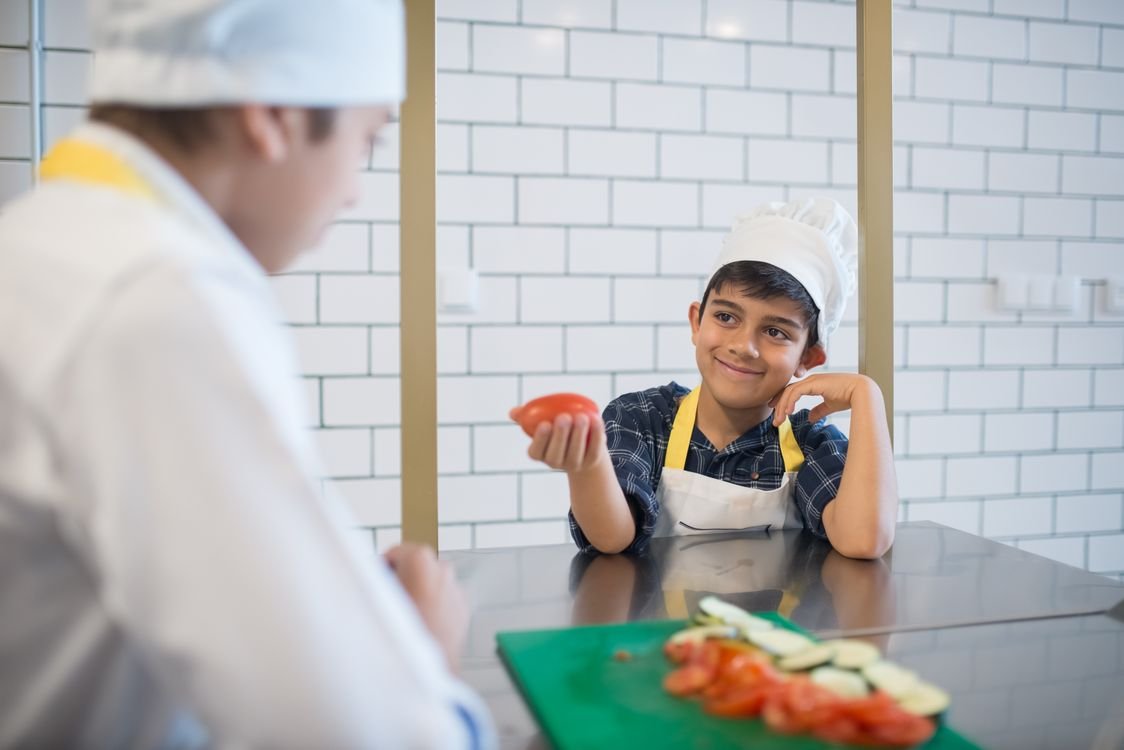
“We need to double this recipe. It calls for 3/4 cup of flour. How much do we need?” That question is a math lesson. It just happens to smell like cookies.
Age-appropriate kitchen tasks:
- Ages 4-5: Wash vegetables, stir batter, pour measured ingredients, tear lettuce
- Ages 6-7: Measure with cups and spoons, crack eggs, spread with a butter knife, read simple recipes
- Ages 8-9: Use a peeler, operate a hand mixer, follow multi-step recipes independently
- Ages 10-12: Use a stove with supervision, plan a full meal, calculate ingredient adjustments for different serving sizes
Five simple recipes kids can own:
- No-bake energy balls (rolling, measuring, mixing)
- Fruit smoothies (fractions, blender operation)
- Personal pizzas on English muffins (assembly, oven awareness)
- Banana pancakes — 2 ingredients only (mashing, flipping with supervision)
- Homemade trail mix (measurement, ratio comparisons)
What we’ve seen work: Kids who cook weekly score noticeably better on measurement and fractions concepts in math. It’s not a formal study — it’s a consistent pattern homeschool families report. The hands-on repetition locks in abstract math concepts faster than worksheets.
Skills built: Measurement, fractions, reading comprehension, sequencing, safety awareness
Supplies cost: Varies — use ingredients you already have
9. Dramatic Play and Storytelling — Best for Language Development (Ages 3-9)
Research from PMC confirms that structured play programs produce significant impacts on cognitive development, including increases in verbal intelligence, verbal creativity, and social-emotional competencies (PMC, 2022). Dramatic play is the engine behind those gains — and it requires nothing but imagination and maybe a few costume accessories.
When a child pretends to be a doctor, they’re doing way more than playing. They’re sequencing events (“first I check the heartbeat, then I give the medicine”), building vocabulary (“stethoscope,” “diagnosis”), and practicing empathy (“how does the patient feel?”).
Dramatic play setups that work:
- Restaurant: Menu cards, notepad for orders, play food. Practices writing, math (adding up the bill), and social interaction.
- Post office: Envelopes, stamps (stickers), a cardboard mailbox. Kids write letters, address them, and “deliver” them.
- Veterinary clinic: Stuffed animals as patients, bandages, a clipboard. Builds care-giving vocabulary and sequencing.
- News reporter: A hairbrush microphone, a “camera” (cardboard box), news scripts. Practices reading aloud, summarizing, and presentation skills.
- Grocery store: Empty food boxes, a calculator, play money. Teaches adding, making change, and decision-making.
Don’t script the play. Set up the environment, introduce the scenario, and step back. The AAP specifically recommends unstructured imaginative play where children direct the narrative themselves (HealthyChildren.org).
Skills built: Vocabulary expansion, narrative sequencing, empathy, social skills, creative writing foundations
Supplies cost: Free to $10 using household items and recyclables
10. Puzzle and Logic Games — Best for Focus and Persistence (Ages 5-12)
In 2025, data from Lurie Children’s Hospital showed that 98% of two-year-olds now watch screens daily, and by age 8, nearly 1 in 4 children own a personal cellphone (Lurie Children’s, 2025). Puzzles and logic games offer something screens don’t: sustained single-task attention without notifications, autoplay, or algorithmic dopamine hits.
A child working on a 300-piece jigsaw puzzle is practicing focus for 30-60 minutes straight. That’s a rarity in 2026. And that skill — sustained attention on a single task — is exactly what they’ll need for reading comprehension, essay writing, and long-division problems.
Logic games by age and skill level:
| Game/Puzzle | Age | Focus Skill | Time per Session |
|---|---|---|---|
| Jigsaw puzzles (24-100 pcs) | 3-6 | Pattern matching, spatial reasoning | 15-30 min |
| Jigsaw puzzles (300-500 pcs) | 7-12 | Sustained focus, patience | 30-90 min |
| Tangrams | 5-10 | Geometric thinking | 10-20 min |
| KenKen puzzles | 7-12 | Arithmetic + logic | 10-15 min |
| Sudoku (easy) | 8-12 | Deductive reasoning | 10-20 min |
| Logic grid puzzles | 9-12 | Elimination reasoning | 15-30 min |
Start easy. If a child fails at a puzzle that’s too hard, they learn “puzzles are frustrating.” If they succeed at one that’s slightly challenging, they learn “I can figure hard things out.” That second belief changes everything.
Skills built: Sustained attention, pattern recognition, logical deduction, frustration tolerance
Supplies cost: $5-15 per puzzle or game
11. Yoga and Mindfulness Activities — Best for Self-Regulation (Ages 3-12)
The Boys & Girls Clubs of America report that STEM activities build critical thinking and creativity — skills that open doors to the fastest-growing careers (BGCA, 2025). But alongside cognitive skills, children need emotional regulation. Yoga and mindfulness build the internal skills that make all other learning possible.
A child who can’t calm down after a frustrating math problem can’t learn the next concept. A child who practices breathing techniques has a tool to reset.
Kid-friendly yoga and mindfulness activities:
- Cosmic Kids Yoga (YouTube): Story-based yoga sessions designed for ages 3-8. Each episode follows an adventure that keeps kids moving for 15-25 minutes.
- Breathing exercises: “Smell the flower” (breathe in through the nose), “blow out the candle” (exhale through the mouth). Simple enough for a 3-year-old.
- Body scan: Lie down, close eyes, notice each body part from toes to head. Takes 5 minutes. Builds interoception — the ability to notice how your body feels.
- Mindful jar: Fill a jar with water, glitter glue, and glitter. Shake it. Watch the glitter settle. “Your thoughts are like the glitter — they settle when you’re still.”
- 5-4-3-2-1 grounding: Name 5 things you see, 4 you hear, 3 you can touch, 2 you smell, 1 you taste. Resets sensory overwhelm in under 2 minutes.
What homeschool families report: Starting the school day with 5 minutes of breathing exercises reduces mid-morning meltdowns. It’s not magic — it’s practice. The same way kids build reading skills through daily practice, they build emotional regulation through daily mindfulness.
Skills built: Emotional regulation, body awareness, focus, stress management, flexibility
Supplies cost: Free (YouTube) to $10 (yoga mat, glitter jar supplies)
Quick Comparison: All 11 Activities at a Glance
| Activity | Best Age | Cost | Prep Time | Key Skill | Screen-Free? |
|---|---|---|---|---|---|
| Kitchen science experiments | 4-10 | Under $5 | 10 min | Critical thinking | Yes |
| Indoor obstacle courses | 3-8 | Free | 5 min | Gross motor skills | Yes |
| Art journaling | 5-12 | $3-8 | 2 min | Emotional expression | Yes |
| Building with recyclables | 4-10 | Free | 5 min | Engineering thinking | Yes |
| Sensory bins | 2-6 | $5-10 | 15 min | Fine motor development | Yes |
| Board games | 5-12 | $15-30 | 2 min | Strategic thinking | Yes |
| Indoor gardening | 4-10 | $3-8 | 10 min | Patience + responsibility | Yes |
| Cooking together | 4-12 | Varies | 10 min | Math concepts | Yes |
| Dramatic play | 3-9 | Free-$10 | 5 min | Language development | Yes |
| Puzzles + logic games | 5-12 | $5-15 | 1 min | Sustained focus | Yes |
| Yoga + mindfulness | 3-12 | Free | 0 min | Self-regulation | Mostly |
How We Selected These Activities
We started with over 50 commonly recommended indoor activities and filtered them through five criteria:
- Research-backed benefits: Every activity on this list connects to published pediatric or educational research. We cut anything that was “fun” without documented developmental value.
- Minimal supplies: Nothing requires specialty equipment or expensive kits. Most use items already in your home.
- Age range: Each activity works across at least a 3-year age span, so siblings can participate together.
- Homeschool integration: Every activity maps to at least one academic subject area (science, math, language arts, PE, art).
- Repeat value: One-time gimmicks didn’t make the list. These are activities kids return to weekly without getting bored.
We specifically excluded activities that require significant adult supervision every minute (like hot glue projects for young children) or activities that need large outdoor spaces.
Frequently Asked Questions
What are the best indoor activities for kids on rainy days?
In 2026, children aged 5 to 8 average 3 hours and 28 minutes of daily screen time (DemandSage, 2026). Kitchen science experiments, sensory bins, and building challenges are the best rainy day alternatives because they hold attention for 30-60 minutes, require minimal prep, and use supplies you already have at home. Obstacle courses also work well for burning energy indoors when outside isn’t an option.
How do I keep indoor activities educational without making them feel like school?
The American Academy of Pediatrics recommends guided play where caregivers offer “just the right amount of support” rather than directing every step (AAP, 2018). The trick is embedding learning into the activity’s structure — not lecturing alongside it. Cooking naturally teaches fractions. Building challenges naturally teach physics. Let the activity do the teaching. Ask questions instead of giving answers: “What do you think will happen if we add more vinegar?”
What indoor activities work for multiple ages at the same time?
Cooking, obstacle courses, and dramatic play scale across ages most easily. A 4-year-old can stir batter while a 10-year-old reads the recipe and measures ingredients. In dramatic play, younger children take simpler roles while older kids manage the narrative. Building challenges work well when you give each child a different difficulty level using the same materials. In 2026, with approximately 3.4 million homeschooled children in the US (Johns Hopkins, 2025), multi-age activities are essential for families teaching siblings together.
How much time should kids spend on indoor activities versus screen time?
The AAP recommends limiting screen time to 1-2 hours of high-quality content daily for children aged 6 and older, with consistent limits for younger children (AACAP). That said, don’t think of it as screen time versus activity time. Think of it as passive time versus active time. A child watching an educational video is still passive. A child building a marble run from cardboard tubes is actively problem-solving. Aim for at least 60 minutes of hands-on, screen-free activities daily — more if your child is homeschooled.
Are STEM activities really that important for young children?
Yes. The Boys & Girls Clubs of America emphasize that STEM teaches problem-solving, critical thinking, and creativity — skills connected to the fastest-growing careers (BGCA, 2025). But the benefit isn’t just career preparation. When a 5-year-old builds a bridge from straws and tests whether it holds a toy car, they’re learning the scientific method: hypothesize, test, observe, adjust. That thinking pattern applies to everything from reading comprehension to social problem-solving.
Conclusion
Your kids are going to spend time indoors — that’s just reality in 2026. The question isn’t whether they’re inside. It’s whether that time builds skills or burns hours.
Every activity on this list connects to real developmental research. Kitchen science builds critical thinking. Art journaling builds emotional vocabulary. Cooking teaches fractions without a single worksheet. And the best part? Most of these cost under $10 or are completely free.
Start with one. Pick the activity that matches your child’s current interest — science, art, building, cooking, or movement. Try it this week. See what clicks. Then add another.
Your living room is already a classroom. These 11 activities just make it official.
Sources referenced in this article, with retrieval dates:
- American Academy of Child & Adolescent Psychiatry, “Children and Watching TV,” retrieved 2026-06-22, https://www.aacap.org/AACAP/Families_and_Youth/Facts_for_Families/FFF-Guide/Children-And-Watching-TV-054.aspx
- Earth.com, “Kids now spend twice as much time playing indoors than outdoors,” retrieved 2026-06-22, https://www.earth.com/news/kids-playing-indoors-outdoors/
- Johns Hopkins Institute for Education Policy, “Homeschool Growth: 2024-2025,” retrieved 2026-06-22, https://education.jhu.edu/edpolicy/policy-research-initiatives/homeschool-hub/homeschool-growth-2024-2025/
- American Academy of Pediatrics, “The Power of Play,” retrieved 2026-06-22, https://publications.aap.org/pediatrics/article/142/3/e20182058/38649/The-Power-of-Play-A-Pediatric-Role-in-Enhancing
- HealthyChildren.org (AAP), “Let Them Play,” retrieved 2026-06-22, https://www.healthychildren.org/English/news/Pages/healthier-children-play-according-to-the-AAP.aspx
- AIMS Press, “Hands-on STEM learning experiences using digital technologies,” retrieved 2026-06-22, https://www.aimspress.com/article/doi/10.3934/steme.2025009?viewType=HTML
- Super Science for Kids, “Why Hands-On STEM Learning Beats Traditional Classrooms,” retrieved 2026-06-22, https://www.superscienceforkids.com/hands-on-stem-learning-benefits/
- PMC/NCBI, “Indoor Loose Parts Play and Cognitive Development: A Systematic Review,” retrieved 2026-06-22, https://www.ncbi.nlm.nih.gov/pmc/articles/PMC12112344/
- PMC/NCBI, “Developing Children’s Creativity through Play,” retrieved 2026-06-22, https://pmc.ncbi.nlm.nih.gov/articles/PMC9590021/
- PMC/NCBI, “Cognitive enrichment through art: a randomized controlled trial,” retrieved 2026-06-22, https://pmc.ncbi.nlm.nih.gov/articles/PMC10993461/
- DemandSage, “Average Screen Time Statistics 2026,” retrieved 2026-06-22, https://www.demandsage.com/screen-time-statistics/
- Lurie Children’s Hospital, “Screen Time Statistics Shaping Parenting in 2025,” retrieved 2026-06-22, https://www.luriechildrens.org/en/blog/screen-time-2025/
- ParentMap / C.S. Mott Children’s Hospital, “One in 10 Young Kids Rarely Play Outside,” retrieved 2026-06-22, https://www.parentmap.com/article/kids-outside-time-decreasing-national-survey
- Boys & Girls Clubs of America, “Five Fun STEM Activities for Kids,” retrieved 2026-06-22, https://www.bgca.org/news-stories/2025/November/stem-activities-for-kids/