
If you’ve ever typed “crafts for kids” into Google at 4pm on a rainy Tuesday, you’re not alone — it’s one of the most searched homeschooling terms in the US, and for good reason. Crafting keeps small hands busy, builds fine motor skills, and turns a recycling bin into an afternoon of actual learning. Below is a practical, no-fluff guide to the best craft, drawing, coloring, and painting activities for kids at home.
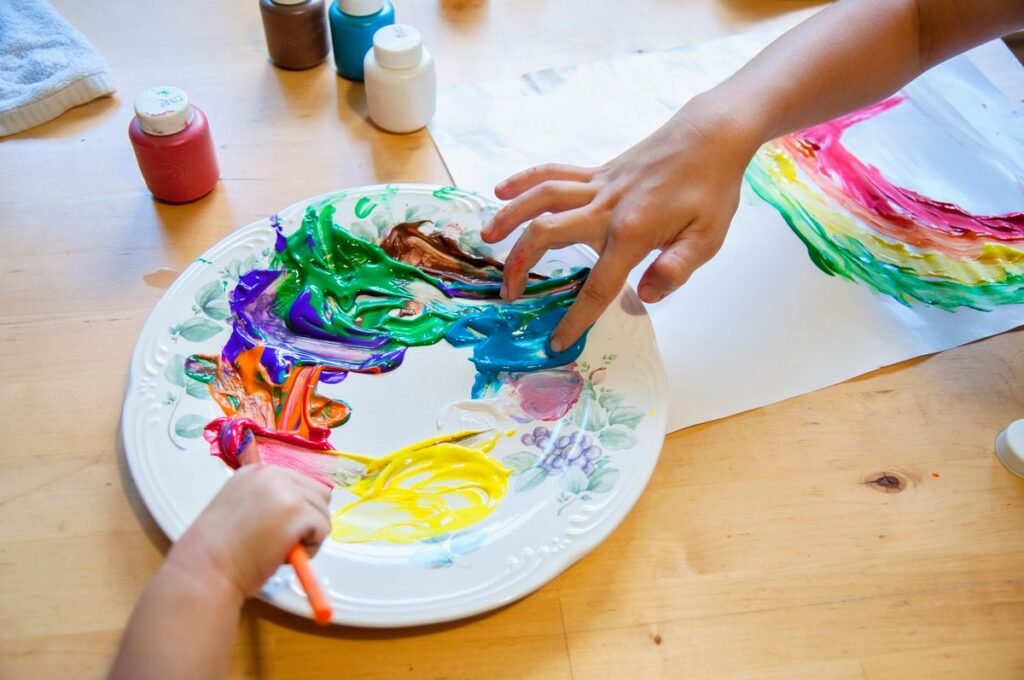
Why Crafts Are More Than Just “Busy Work”
Cutting, gluing, and coloring look simple, but they’re doing real developmental work. Holding scissors and small brushes strengthens the same hand muscles kids later use for handwriting. Planning a project — even something as basic as a paper plate mask — exercises sequencing and problem-solving. And because most crafts have no single “right” answer, kids get a low-pressure way to make decisions and express ideas.
Easy Craft Ideas for Toddlers and Preschoolers (Ages 2–4)
- Paper plate animals – glue on cotton balls, googly eyes, or torn tissue paper.
- Sticker collages – pure fine-motor practice with zero mess.
- Sponge stamping – cut sponges into shapes and dip in washable paint.
- Pasta necklaces – great for counting and patterning while crafting.
For more age-specific ideas sorted by skill level, our Preschool Activities section has additional hands-on projects designed for this age group.
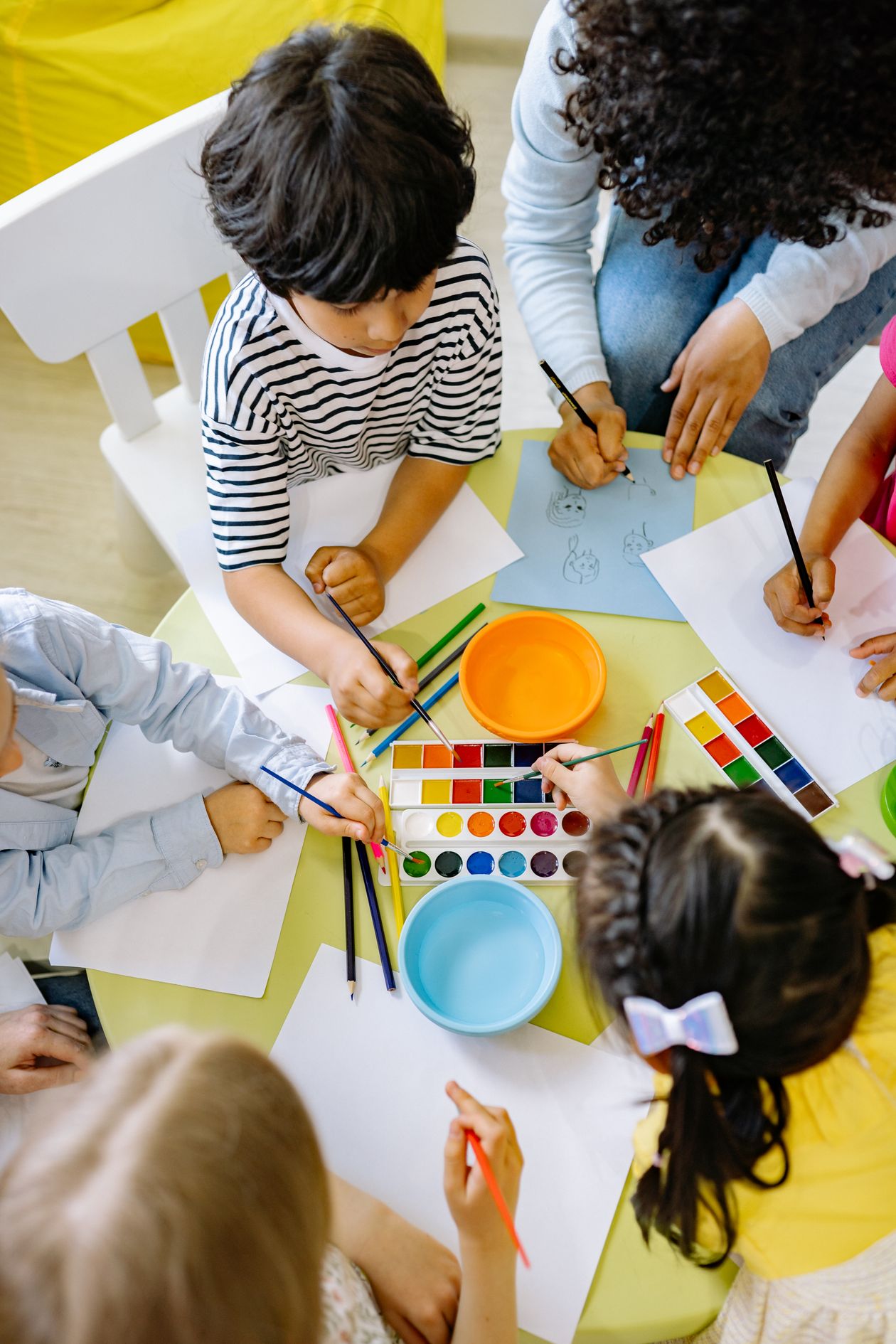
Drawing Activities Kids Actually Stick With
Not every child loves a blank page — some need a starting point. Try these:
- Draw-along videos where kids copy a simple character step by step.
- “Finish the doodle” — draw half a shape and let your child complete it.
- Self-portrait check-ins once a month, kept in a folder so kids can see how their drawing changes over a year.
Coloring Sheets That Go Beyond Busywork
Printable coloring sheets are an easy win, but you can stretch the learning value:
- Pick sheets tied to a current topic — if you’re doing a unit on the ocean, find ocean-themed pages.
- Ask your child to name the colors out loud as they go (great for preschoolers building vocabulary).
- Turn finished pages into a “gallery wall” for a small dose of pride and motivation.
Painting Projects Worth the Mess
- Watercolor resist – draw with a white crayon, then paint over it to reveal the hidden design.
- Bubble painting – mix paint with dish soap and a straw, then blow bubbles onto paper.
- Q-tip pointillism – dot painting using cotton swabs, surprisingly calming for kids who struggle to sit still.
Pair painting days with our Kids Activities hub for more indoor ideas when the weather doesn’t cooperate.
Seasonal and Holiday Crafts
Search data shows huge spikes for seasonal crafts — Halloween, fall leaves, Thanksgiving, and Christmas ideas are searched hundreds of thousands of times a year in the US. A simple way to keep a homeschool routine fresh is rotating a “craft of the month” tied to the season, so kids have something new to look forward to without you reinventing the wheel every week.
Setting Up a Low-Stress Craft Station
- Use a washable tablecloth or tray to contain mess.
- Pre-portion supplies in small cups so kids can self-serve.
- Keep a “finished work” bin so projects don’t pile up on the table.
- Store supplies at kid height so they can grab and go independently.
Frequently Asked Questions
What age can kids start doing crafts?
Most children can start simple sensory crafts — like sticker collages or finger painting — around age 2, with scissors-based crafts typically introduced closer to age 4 once fine motor control improves.
How do I keep craft time from turning into a mess disaster?
Set clear boundaries before starting (where paint stays, what’s off-limits), pre-portion supplies, and keep wipes within reach. A washable mat under the workspace solves most of the problem.
Are crafts actually educational, or just entertainment?
Both. Crafting builds fine motor skills, sequencing, color recognition, and creative problem-solving — all of which support later academic skills like handwriting and math reasoning.
For general guidance on play-based learning and creative development, the National Association for the Education of Young Children (NAEYC) publishes useful parent resources. The American Academy of Pediatrics also covers age-appropriate play milestones, and Edutopia regularly publishes research-backed articles on creative learning in early childhood.
Looking for more free homeschooling ideas? Browse the full list of categories on our Kids Learn Home homepage.